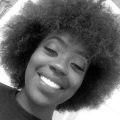
Ebonee Johnikin, poised to begin her college journey at Delta State University in Cleveland, Mississippi, on a cheerleading scholarship, sat in the backseat of her parents’ car in 2005 as the family traveled from Laurel, Mississippi, to the Bolivar County campus. Up until that day, none of them had been in the region. As they drove through Jackson and ventured farther into the Delta, the landscape changed from buildings and city lights to flat land that went on for miles.
“What is this?” Johnikin whispered under her breath as the car coasted along the highway.
Living in the Delta for her college years was a culture shock for the young Mississippian, who had a much different experience growing up in Laurel. Those differences, however, did not stop her from acclimating to life in the Delta and working in the community alongside students local to the area. She eventually got over her culture shock, settled into the community and began to recognize the needs that existed.
“There was a very defined need that I saw within the community (like) access to resources and things that were just very normal to me like going to shop or … healthcare,” Johnikin said, adding that she was affected by “seeing how people in the same state just three-and-a-half hours away live a very different life than what I had known.”

The Mississippi Delta has been saddled with narratives that focus on the more negative aspects of the region with little to no nuance about the region’s contributions to music and culture, Johnikin supposes. As the chief strategy officer for Foundation for the Mid South, she is looking to change the messaging around the region through the Delta Story Project, which aims to use storytelling and art as vehicles to amplify voices from the Mississippi Delta.
”When we see something from the Delta that’s in art, it gives us a different perspective of the need, the talent, what’s available there, and how great of an area it really is,” Johnikin said.
‘Broader Visibility … Understanding’
The W. K. Kellogg Foundation is funding the program as part of the Foundation of the Mid South’s Mississippi Truth, Racial Healing and Transformation initiative. The organization has selected seven cohorts, who will each be paid between $2,500 and $7,500 to produce works that reflect the Mississippi Delta.
Cohorts include Brejenn Allen from Meridian, We2gether Creating Change in Drew, LaTonya Lark in Webb, Steven Randle from Vicksburg, Scott Barretta in Greenwood, IAJE in Jackson, and Elizabeth Robinson in Jackson. All have connections to the Mississippi Delta that they intend to infuse into their artworks as the project’s first wave of contributors.
“There was an application process where applicants had to share their connection to the Delta region: whether they are from that area, they’ve lived there, they grew up there—whatever their connection is—and they had to also notate what county, so that we could weed out just anyone who wanted to apply,” Johnikin explained.
Planning for the project began in late fall 2025. Applicants were allowed to create work through writing, film, photos, audio, visual or multimedia storytelling. Mid South officially announced the cohorts on June 23, who will have until December to work on their projects before premiering them at a showcase on Jan. 20, 2027, coinciding with Martin Luther King Jr. Day and National Racial Healing Day.
“We want (to portray) lived experiences as much as possible,” Johnikin said. “(We are) looking at how their project will contribute to a broader visibility or understanding of the community.”

Mid South worked with comedian Rita Brent to help promote the Delta Story Project, which received more applicants than organizers initially expected. While reviewing applications, Johnikin noted the passion, talent, and diversity that she saw, making it very difficult to choose. The flood of application submissions shows the need for an initiative such as this and opens the door for them to expand the project and reach more people.
“ Mississippi has a good ground for development of so many gifts and talents: whether that’s art, whether that’s music, whether that’s intellectual or advocacy,” Johnikin said. “Whatever that is, Mississippi is a really, really good ground for developing those skills and those talents, and people don’t really acknowledge that (enough).”
A Subconscious Infusion
For the Delta Story Project to be considered a success, Johnikin believes that cohorts need to leave fulfilled with the work they do, knowing that their efforts can leave an impact on the community and broaden the world’s view of Mississippi and of the Delta, specifically.
“Man, this has been a very emotionally invested project because I’ve loved it since we started it,” the Jones County native said. “Thinking about putting it all together, reading the applicants, having video calls where we walk them through what the application process looks like, going through the applications, talking about it amongst our team, selecting applicants—there’s been a lot of investment.”

Brejenn Allen is not from the Mississippi Delta, but she does have family that lives there. The artist expressed enthusiasm over the opportunity to expand her knowledge about the region and its culture through this project.
“I’m excited to learn from the other artists in the cohort and their connections to the Delta,” Allen told the Mississippi Free Press. “I know that there’s so much culture there, and I’m excited to explore more of it, learn more about it and see how it impacts my art. My experiences always subconsciously infuse themselves into my work.”
While she may not be a Delta native, friends and colleagues encouraged her to apply for the project. Mid South accepted her application and ultimately chose her as one of the cohorts, as long as she created work that centered on the Delta. She plans to create a painting series around quick-loan businesses, venturing into how simultaneously predatory yet life-saving they can be for Mississippians in a bind. The idea expands on a painting she did on a Speedy Cash in Meridian, her hometown.
“I just wanted to play with that a little bit more, exploring the loan places and the people who have to get loans from these places and create a painting series of these quick loan places,” the visual artist said. “I’ve been in a situation where I’ve had to get loans, and they can be very predatory and take advantage of people. But at the same time, we have no other choice because we need money quick.”
Other artists are still deciding what direction to take their contributions to the project.
“I’m really looking forward to what they produce after six months,” Johnikin said.
The Delta Story Project will run from June to December 2026. A showcase for the cohorts will take place on Martin Luther King Jr. Day and National Racial Healing Day on Jan. 20, 2027. To learn more about the Delta Story Project and the Foundation of the Mid South, visit fndmidsouth.org.