


From the moment I heard Elon Musk was considering buying Twitter, I knew things were going to go downhill. My husband had clued me in years earlier with his scathing criticisms of the tech billionaire’s behavior, and while I’m prone to try to see the best in people until absolutely proven otherwise, Liam turns out to be a pretty good judge of character the vast majority of the time.
When Musk first made his intentions to buy the platform clear, I tweeted in April 2022 that I was “not leaving Twitter because I have a responsibility to share news with my audience here” even as I predicted that Twitter was “going to tank in the coming years under Musk.”
So even after his takeover late that year began wreaking havoc on the platform, which he ultimately renamed X, I tried hard to hang on. I’d invested a lot in that platform over the past 15 years or so; it wasn’t easy for a Mississippi journalist to build a following of over 50,000 people on any social-media platform. Where else would I be able to share our Mississippi Free Press stories to such a wide audience?
Plus, I’d found many interesting people on there over the years. Leaving wouldn’t just mean leaving a platform and followers—it would mean leaving a community and friends. So even as the hordes of unmoderated and abusive trolls, porn bots and crypto bros flooded in, I clung on. “Your voice is needed there,” I’d tell myself, reflecting sentiments others had shared.
I signed up for and tried the alternatives that kept popping up. Mastodon, which was cumbersome with its requirement to pick a server when signing up; Post News, the now-defunct social platform that launched in November 2022 and shut down in April 2024 due to slow growth; Threads, Meta’s wannabe-Twitter-replacement that suppresses accounts that post about news and “politics” and where a third of the posts sound like a corporate committee drafted them; and BlueSky, which felt like a private club at first because it only allowed limited numbers of people to sign up using invite codes when it first launched.
For a long time, it seemed like nothing was going to replace Twitter, even as it further devolved into a hellscape that seemed as if it were overrun by the trolls of 4chan, the neo-Nazis of Stormfront and the dullest AI bots Chat GPT ever powered. Twitter transformed into X, a place where racism, misogyny, homophobia and especially transphobia run rampant under the guise of “free speech,” but where using the word “cisgender” can get your account restricted because Musk (who has described his very-much-alive transgender daughter as “dead”) considers it a slur.
I had really wanted one of the Twitter alternatives to take off, but one of the biggest impediments was the lack of buy-in from major journalists, publications, celebrities and other figures who could draw audiences away. A familiar pattern developed: People would leave X in hopes of joining another platform, then come back.
And then, all at once, things shifted quickly.
In October, Musk announced a major change to the block feature: people you blocked would still be able to see your posts, allowing even people you blocked because of threats to your safety to continue monitoring your posts. That prompted a fresh wave of people to leave X. Around that time, I asked Mississippi Free Press Creative Director Kristin Brenemen if we could start posting on BlueSky now that there were finally post-scheduling options, and our team—including our digital editor, Dustin Cardon—made it happen.
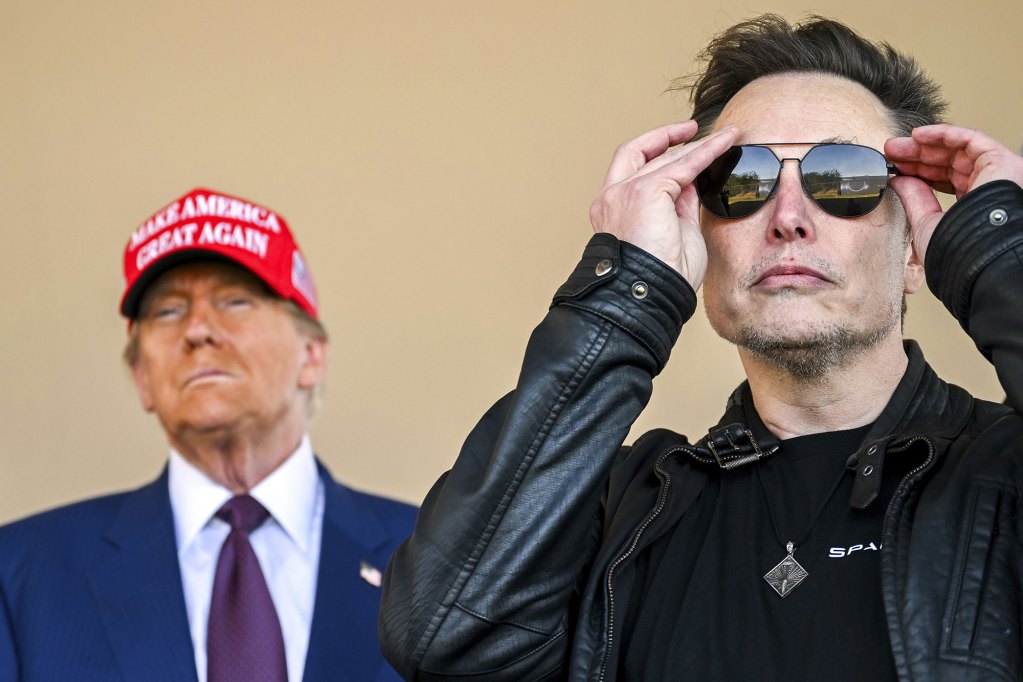
But what really launched the great exodus was Donald Trump’s victory on Nov. 5. During the campaign, Musk not only openly supported Trump’s campaign, but researchers have reported that X appears to have tweaked its algorithm to turboboost Trump and other MAGA-aligned Republicans. With X’s owner set to be actively involved in Trump’s presidency (leading some to refer to him as Co-President Musk), that meant that one of the largest and most influential social-media platforms in the world would suddenly be owned by a government-aligned billionaire with the ability to control what you see, whether anyone sees what you have to say and to manipulate your emotions.
For millions, that was the final straw. In the weeks since the election, my BlueSky account has grown from about 2,000 in early November to over 43,000 today. That’s near my total X following of 50,000, built over 15 years. The Mississippi Free Press’ BlueSky account has already surpassed its X following of 22,000 (which took nearly five years), growing from fewer than 1,000 followers in October to over 25,000 today. And even before our MFP’s BlueSky account surpassed our X account, our identical posts linking to the same stories on both platforms were getting far more engagement on BlueSky. It’s funny what happens when an algorithm isn’t artificially punishing links and news stories.
But you know what I really enjoy about BlueSky? It doesn’t pigeonhole me. On other platforms, particularly X, you choose one facet of yourself and that’s the following you get, and the algorithm recommends you based on that. On BlueSky, I get to be a Mississippi journalist whose news stories draw engagement from people who care about news, but I also get to be a film photographer whose posts about my black-and-white film adventures spark conversations, too. None of us is just one thing, no matter what some lousy algorithm thinks, and it’s affirming to be able to build communities around shared interests beyond just news and politics. Social media should be social, not anti-social.
It’s clear that people are hungry for social-media alternatives to the ones driven by algorithms designed to suck you in with addictive videos and rage-inducing content tailored just for you. And after trying to tough it out on X, I am done.
No social-media platform is perfect, and BlueSky definitely has some kinks to work out. And users, journalists and the public should hold its team accountable to ensure it remains a good place to be as it continues to grow. But it’s already miles ahead of X.
My experience as a journalist on BlueSky has reminded me that my job is to provide good information to those who want it, not to argue with trolls and validate attention-seeking behavior from the worst people on the internet. My desire to reach a diverse audience does not have to entail subjecting myself to constant abuse. I am not obligated to stay on a platform where Nazi trolls with 1488 in their usernames and cartoon frogs as their profile images regularly hurl the word “fagg-t” at me and issue veiled threats. I do not have to entertain the endless stream of incels who think “soy boy” is some sort of profound insult. I do not have to accept being under the thumb of an algorithm that prioritizes crypto scams, AI bots and conspiracy theorists over my voice.
And you know what? You don’t either.
Some of the smarter people among us have said that BlueSky is an echo chamber. Well, right now, it’s a place where I hear the echoes of artists, writers, cinephiles, scientists and neighbors caring about their neighbors. And that’s a hell of a lot better than being trapped in a chamber that’s increasingly filled with the echoes of Adolf Hitler.
So farewell, Twitter. I’m off to bluer skies.
You can follow Ashton on BlueSky here, the Mississippi Free Press here and the entire MFP team with the Mississippi Free Press Starter Pack here.


Comments are closed.