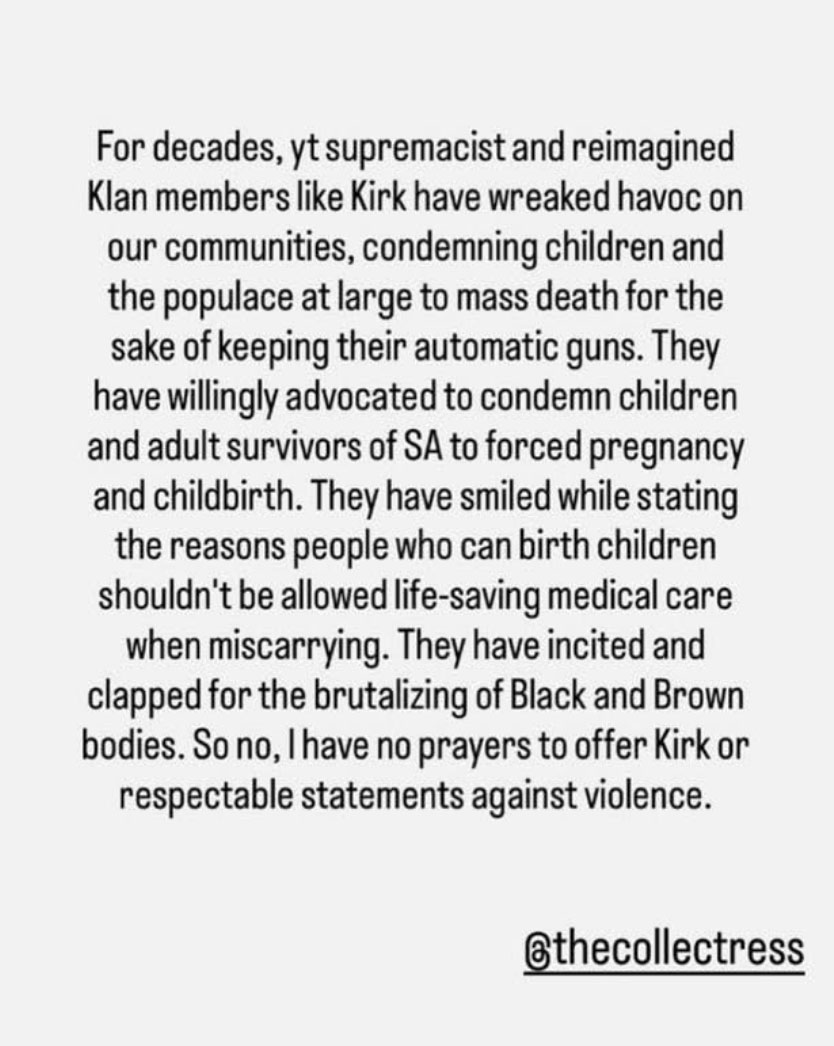
OXFORD, Miss.—University of Mississippi Chancellor Glenn Boyce dined at Tarasque Cucina, an Oxford restaurant owned by Lauren Stokes, on the same night she shared an Instagram post about Turning Point USA founder Charlie Kirk that prompted Boyce to fire her.
The detail emerged in a brief filed in federal court on Feb. 20 by Stokes’ attorney, Alysson Mills, who argued that Boyce violated Stokes’ First Amendment rights by firing her from her job as executive assistant to the vice chancellor for privately criticizing the slain conservative activist.
In a Feb. 13 hearing, Mills and co-counsel Lilli Bass called seven witnesses to the stand: Stokes herself, coworker Angela Atkins, UM sociology professor Dr. James Thomas, Pre-College Programs Director Dr. Wendy Pfrenger, and three UM students—Calvin Wood, Kathryn Elizabeth Wildman, and Lauren Hite.
Through testimony and 10 exhibits, the witnesses painted a detailed picture of events that occurred in the chaotic hours after 1:23 p.m. on Sept. 10, 2025, when a gunman assassinated Kirk at Utah Valley University, including UM’s response to Stokes and what happened on campus in the following weeks.
Stokes testified that as an executive assistant to Vice Chancellor Charlotte Parks, she handled administrative tasks like scheduling meetings and reserving event tickets. She worked her regular shift on Sept. 10 in the Development office, then went to Tarasque Cucina, the restaurant she owns with her husband, John Stokes.
Around 4:30 or 5 p.m., she learned about the shooting that killed Charlie Kirk from her sister-in-law, Stokes testified. Then, around 7:30 or 8 p.m., she shared an Instagram post from an account called “thecollectress.”

The post described Kirk and those like him as “yt supremacist and reimagined Klan members” who had “wreaked havoc on our communities” through opposition to gun control, support for abortion restrictions and racist rhetoric. It concluded, “So no, I have no prayers to offer Kirk or respectable statements against violence.”
Soon after reposting, Stokes’ husband called to say that friends were calling him, saying they were offended by the repost, she testified. Lauren Stokes deleted it around 9 p.m., but it was too late. By 9:30 pm, someone anonymously posted a screenshot of Stokes’ Instagram repost on the “What’s Happening in Oxford” Facebook page, which has over 108,700 followers.
Stokes immediately posted an apology on Instagram and on the Oxford Facebook page, which generated 480 comments.
“This re-post on my private account was not kind,” she wrote. “I apologize to those I have offended.”
Around 10:30 p.m., Stokes texted Parks, “I posted something very reactive and intense and unkind and political on my private account which I’m not proud of but was caught in the heat of the moment. Doesn’t excuse it! But sometimes the internet can rile us up!… A good (if brutal) lesson to learn that nothing is truly private!”
“I am just worried about you,” Parks replied. “I hope people are more rational in the morning. These are crazy times.”

Screenshots of Stokes’ repost quickly went viral. One shared on X received over 2.6 million views, and other social media threads about it drew even more views.
Stokes testified that her brother called around 2:30 a.m. from Salt Lake City to tell her that she had been “doxxed” on X. Her personal information, along with her workplace and restaurant’s addresses and phone numbers, had been posted online.
Stokes testified that she could not sleep that night and began receiving harassing calls and threats. Around 3:45 a.m., she emailed Parks and the Human Resources office, offering to help “de-escalate the situation.”
Shortly after she arrived at the HR office around 9 a.m. on Sept. 11, UM placed her on paid administrative leave “in your best interest,” with university police providing security.
The screenshot of Stokes’ repost continued to go viral. At 12:44 p.m., Mississippi State Auditor Shad White posted on Facebook and X: “To Ole Miss, did an Ole Miss employee just repost this insane reaction to Charlie Kirk’s murder? Answer:,” followed by Stokes’ photo and a screenshot of her Instagram post. His Facebook post received over 1,300 comments, while the X post received over 60,000 views.
Stokes testified that Parks urged her to resign, but she told Parks she needed to consult with a lawyer first. A recording of the calls was played in court. According to Stokes’ testimony, Parks called back around 11:30 a.m., giving her one hour to decide.
At 12:50 p.m., Parks called back and asked if Stokes had an answer.
“It was all so rushed, and I was dealing with the restaurant and work,” Stokes said. “I said I didn’t have an answer for her still. And that’s when they fired me.”

At 1:10 p.m., less than 20 minutes after she was fired, Boyce posted a public statement on Facebook announcing the termination.
“We condemn this action, and this staff member is no longer employed by the university,” he said. “All of us have a responsibility to take seriously our commitment to upholding a civil and respectful campus environment.”
According to court filings, the chancellor’s statement received over 1.3 million views. Mills stated that Boyce has allegedly cited this metric “as justification for the firing, but all he succeeds in establishing is that he was motivated by, and fed, an online mob.”
After her husband received a screenshot of the announcement from a friend, Stokes “had a good cry,” she testified. Less than two hours later, their restaurant received an anonymous phone call threatening violence. The Oxford Police Department called a bomb squad, which found nothing. However, OPD urged the couple to leave town for their safety.
Stokes testified that death threats were “nonstop for days.” She and her family were forced to leave Oxford for nearly three weeks, close Tarasque Cucina for two weeks, and hire security when the restaurant reopened.
According to Stokes’ testimony, the university never publicly condemned the violent threats she received and never reached out to her after the firing except to FedEx termination papers on Oct. 9, nearly a month later.
‘Like an Amber Alert for Speech’
Although Chancellor Boyce did not name Lauren Stokes, he called her repost “hurtful” and “insensitive” and said her comments “run completely counter to our institutional values of civility, fairness and respecting the dignity of each person… This staff member is no longer employed by the university.”
In attorney Alysson Mills’ closing argument, she said that when Boyce fired Stokes, his “email to all faculty, staff, and students operated like an Amber Alert. It communicated, ‘Say something bad about Charlie Kirk at your peril.’”
Professor James Thomas testified, “I cannot recall in my 13, almost 14 years at this university, such a brazen effort to curtail our First Amendment rights on campus.”
UM Annual Gifts Officer Angela Atkins testified that no university policy prohibits political posts on social media and that Boyce’s public email announcing Stokes’ firing was “absolutely unheard of” in her experience with campus terminations. She said she knows many UM colleagues who often make political posts and use personal social media accounts for different reasons.

Stokes testified that Boyce’s statement “made my firing newsworthy, and it condemned me to my whole community.”
“I didn’t realize how beloved Charlie Kirk was. Men older than me spat on me in public,” she said. “People are still saying vitriolic things to me. I’m still suffering and humiliated.”
Atkins, who has known Stokes for over 20 years, described Stokes as “sort of like an office manager” for about 50 Development Office employees.
“Lauren is such a nice, personable, positive, joyous person, and she brought that energy to work every day. She is the type of person that it bothers her to think that she hurt someone’s feelings,” she said.
Atkins testified that Stokes “was just stating her opinion.”
“It hurt to know how bad she felt, how sad that she was, how devastated she was, and the hate and vitriol that was coming her way from this online mob of weirdos,” she said.
“We have the constitutional right to share our thoughts on matters of public concern, and we don’t have to have the same set of thoughts or ideas about those matters,” Thomas told the Mississippi Free Press after the hearing. “That’s actually what makes our university, and any public university, so important to the maintenance of democracy. Universities should be places where people can disagree with one another and challenge one another’s thinking.”
When asked for comment for this story, University of Mississippi officials pointed to the defense’s court filings, which are cited in this story.
‘Looming Fear of Violence and Uncivility’
In its post-hearing brief, the defense argued that the university faced “swift and substantial” disruption, pointing to threats Lauren Stokes received, the need for campus police involvement, donor concerns, the need to place Stokes on administrative leave for her safety, and paused donor outreach calls.
Professor James Thomas, who was once a target of State Auditor Shad White for his participation in an anti-racism strike, testified that any “chilling effect” on speech came not from Stokes’ private Instagram post but from Chancellor Glenn Boyce’s public condemnation of it.

After the hearing, Thomas told the Mississippi Free Press that “on Sept. 11, we all taught our classes, students came to our classes, and various units across campus did their jobs.” When Boyce “drew our attention toward the post, his actions chilled speech across campus,” he continued. “People were scared to speak their minds, and faculty were worried about addressing students’ questions about Charlie Kirk.”
Thomas testified that university operations continued normally after Stokes’ reposting. Atkins also contradicted claims of severe disruption, testifying that a major $1.6 billion campaign celebration happened the day after Stokes’ firing. “Rousing success,” she said. “More people attended than we even thought would attend. It was wildly successful, very positive.” She said that “Lauren was instrumental in the planning” for the event.
In her closing argument, attorney Mills said that any disruption came from external online harassment of Stokes, not from workplace impact. Stokes’ post “was after work,” she said. “It was private. Any disruption was external and fleeting. And doxxers caused it, not Lauren Stokes.”
“By contrast, the Turning Point event on Oct. 29 did disrupt a lot,” Mills said, referring to the event on campus that featured Vice President J.D. Vance and Kirk’s widow, Erica Kirk. “Classes were cancelled, and students didn’t want to come to campus.”

Calvin Wood, a public policy leadership major, testified that his classmates “were worried about the looming fear of violence and uncivility on campus.”
“As I was walking around campus, it was really clear to me that no classes were happening,” he said.
He said UM did not provide any security for a simultaneous, counter-event hosted by the College Democrats, even after the group received numerous threats that were reported to university police.
“I’ve had a lot of hardship in the past four years at the university just from having a very strong different political belief than the majority at the university,” testified Kathryn Elizabeth Wildman, a public policy leadership major from Laurel. “People are scared to even come to an event or have their name on an event.”
Dr. Wendy Pfrenger testified that many employees were uncomfortable being on campus, and her office cancelled a children’s event that day.
She said she received an email from a job candidate saying, “I’d like to withdraw my candidacy for consideration. I don’t want to work in a place that doesn’t protect its employees’ rights.” She testified that colleagues were asking her to review their personal social media posts. “I knew people who were feeling fear about what we can and can’t say as a public employee.”

Wildman testified that Boyce seemed “excited about so much national attention because of a specific political belief.” In an Oct. 30 Daily Mississippian article, Boyce said Vance and Kirk spoke at UM because of “the trajectory of this university and the national visibility this university has gotten over the last 5-6 years. I think as much as anything, we are now truly on a national map in many ways.”
After the hearing, Thomas told the Mississippi Free Press that Boyce “gave carte blanche to a political rally on our campus in honor of Charlie Kirk. He even held up a sign that read ‘I am Charlie Kirk.’”
Thomas also testified that students were worried for their safety that day, and some were intimidated by a massive law enforcement presence on campus.
The Pickering Test and Viewpoint Discrimination
In her Oct. 21 lawsuit, Lauren Stokes argued that Chancellor Boyce violated her First Amendment rights through viewpoint discrimination by publicly condemning her speech as “completely counter to our institutional values” and by terminating her for private speech on a matter of public concern.
The case tests whether public universities can terminate employees for private social media posts that express controversial political views. This question has taken on new urgency as similar cases have emerged nationwide following Kirk’s assassination. Many federal courts have ruled that public employers cannot fire workers solely because they disagree with their viewpoint, even when the viewpoint generates public backlash.
Attorney Mills cited recent federal appeals court decisions holding that public employers cannot fire workers solely for expressing controversial viewpoints, including cases involving police officers who made racist social media posts and a university lecturer who glorified Hitler.
“By calling the speech in question ‘hurtful and insensitive,’ Boyce communicated that the speech’s viewpoint was wrong,” Mills wrote. “When he said, ‘we condemn this action, and this staff member is no longer employed,’ he communicated that expressing the speech’s viewpoint, even privately, was a fireable offense.”
The post-hearing brief from the defense did not address the viewpoint discrimination allegations. Stokes’ First Amendment case hinges on a legal framework established by several landmark U.S. Supreme Court cases, including Pickering v. Board of Education (1968), Connick v. Myers (1983), Garcetti v. Ceballos (2006), and Rankin v. McPherson (1987).
Mills cited many recent high-profile federal appeals that have ruled in favor of public employees fired for controversial social media posts. These included Fenico v. City of Philadelphia (2023), Brown v. City of Tulsa (2024), and Jorjani v. New Jersey Institute of Technology (2025).
Under these precedents, mere public controversy or external pressure is usually not sufficient to justify termination, Mills argued.

The Stokes case hinges on what courts call the “Pickering balancing test,” a framework established by the Supreme Court in 1968. It asserts that the employer must prove the speech caused substantial, actual disruption to its operations.
The test asks: When a public employee speaks as a private citizen on a matter of public concern, whose interest wins: the employee’s right to speak freely, or the employer’s need to prevent workplace disruption? And did the employee’s speech actually disrupt operations, or did the employer just disagree with what was said?
In her notice of intent to subpoena, Mills argued that “Boyce has the burden to prove his termination of Stokes’s employment was justified. Boyce has failed to carry it.”
In her closing argument, Mills said, “In the Pickering balancing test, the interest in the speech is exceedingly high, as high as it gets. And that means that the university, to justify this, has a very, very high burden of proof, and it has to prove disruption. And it hasn’t.”
The defense argued that the disruption caused by her post was “real,” “external,” and “only stopped after the Chancellor made the decision to terminate Plaintiff’s employment and issued a public statement.”
Mills argued that Boyce’s announcement about the firing transformed a social media controversy into a campus-wide issue, citing testimony from faculty, staff and students who said they first learned about Stokes’ firing from the chancellor’s announcement.
“If anything disrupted campus that day, it was Boyce’s email,” Mills wrote in her post-hearing brief, “inasmuch as everyone talked about it after.”
In MacRae v. Mattos (2025), a case Mills cited as similar to Stokes’, a Massachusetts public school employee was fired for sharing political memes on TikTok expressing conservative views on immigration, gender and race. The First Circuit Court of Appeals upheld the firing, ruling that disruption to her employer’s interests outweighed her speech rights.
When the U.S. Supreme Court declined to hear the MacRae case, Justice Clarence Thomas wrote separately to criticize the First Circuit’s reasoning. He argued that factoring viewpoint into a disruption analysis misapplies the Pickering framework, even when posts speak in a “mocking, derogatory, and disparaging manner.”
“It undermines core First Amendment values to allow a government employer to adopt an institutional viewpoint on the issues of the day and then—when faced with a dissenting employee—portray this disagreement as evidence of disruption,” he wrote.
“Public employers cannot use unsupported claims of disruption to target employees who express disfavored political views,” Thomas wrote. “We have declined to afford less than full First Amendment protection, even for speech that we have deemed particularly hurtful.”
‘The Most Protected Speech’
Chancellor Glenn Boyce, the only named defendant, failed to appear at a Feb. 13 hearing to consider a preliminary injunction to reinstate Lauren Stokes in her UM job. At the close of the hearing, U.S. District Judge Glen Davidson instructed Mills to subpoena Boyce if she wanted him to testify at a follow-up hearing set for Feb. 20. “I assume that he wouldn’t be very hard to find,” the judge said.
On Feb. 16, Boyce’s attorneys asked the court to quash the subpoena, arguing it would impose an “undue burden” on the chancellor to alter travel plans scheduled months in advance.
Withdrawing the subpoena, attorney Mills wrote, “Stokes has already proved her case. She will have an opportunity to examine Boyce soon enough, and that examination will be more meaningful with the benefit of full discovery.”

The subpoena fight stemmed from the Feb. 13 hearing that Boyce had specifically requested but failed to attend. Defense attorney Cal Mayo told Davidson that the chancellor had no obligation to attend the hearing because Boyce had never been subpoenaed to testify. The defense presented no witnesses, no evidence, and no closing argument in his defense.
After the hearing, Dr. James Thomas told the Mississippi Free Press that Davidson appeared “a little perplexed by the university’s lack of preparation, and Boyce’s not being there when he was called as a witness.”
“The perception in that courtroom among attendees was that the university was arrogant, incompetent, or both,” Thomas said.
Mills argued that the university has the burden of proof. In her response to Boyce’s motion to quash the subpoena, she wrote, “Boyce does not want to testify in open court,” citing his delayed response to Stokes’s motion for an injunction, the delay of the hearing, his failure to appear at the hearing, and his withholding of documents before and after it.
Boyce’s “attitude toward these proceedings is indicative of how he treated a beloved employee on Sept. 11,” she wrote. “One employee’s livelihood and dignity; an entire faculty, staff, and student body’s freedom of speech are no consequence to him. They are matters of inconvenience, that’s all.”
Mills filed public records requests on Jan. 8 for emails and calls referenced in Boyce’s court filings. On Feb. 12, the day before the hearing, the defense informed Mills that records were ready and instructed her to mail them a check for $694. Mills received these records on Feb. 16, the same day the defense filed a motion to quash the subpoena for Boyce to appear in court.
The university withheld some requested records as privileged. Mills wrote that the defense did not say how many records it withheld or describe what it withheld.
The records they did provide “are not elucidating,” she wrote. Mills claims the defense refuses to produce any items Boyce relied on in his decision to terminate Stokes. The defense “won’t tell us who the important public officials were who allegedly told Glenn Boyce to fire Lauren Stokes,” Mills wrote.
In the defense team’s post-hearing brief, it argued that the court “should decline Plaintiff’s invitation to substitute its judgment for the Chancellor’s as to the appropriate course of action,” and noted that someone else now occupies Stokes’ former position.
Mills countered, “To the extent Boyce complains that the University already filled Stokes’s position, the Court cannot hold that fact against Stokes.”
The defense argued that Stokes has failed to show that she faces irreparable harm warranting a preliminary injunction to reinstate her.
Defense attorney Cal Mayo cited a recent Arkansas case involving another public employee fired for comments about Kirk’s death. In that case, Gray v. Mallory, a federal judge denied a preliminary injunction, ruling that the termination was “a single, discrete act that took place entirely in the past,” rather than ongoing government action that would continue to chill the employee’s speech.
The Arkansas court wrote that Gray’s department cannot chill her speech because she no longer works for it. “At present, Ms. Gray can speak her mind without any fear of retribution.” Boyce’s attorneys argued that Stokes’ case is similar. “Plaintiff has presented no proof of irreparable harm,” they wrote.
Mills wrote that Boyce’s actions did create a “chilling effect” on campus speech, pointing to testimony about faculty, staff and students feeling fear about what they can say as public employees.
In her closing argument, Mills said that Boyce’s termination of Stokes fits the pattern that Thomas warned against: a public employer using claims of disruption to mask viewpoint discrimination.
If the case goes to trial, a jury will decide whether Boyce violated Stokes’ constitutional rights and, if so, what damages she is entitled to receive. According to her complaint, Stokes is seeking both compensatory and punitive damages for “extreme emotional and financial damages,” costs, and attorneys’ fees.
“We’re here to say that the university cannot establish an institutional viewpoint on an issue of the day and then, when faced with a dissenting employee, portray the disagreement itself as evidence of disruption,” Mills said. “What you have is political speech, the most protected speech. It has the highest value under the First Amendment. And you have viewpoint discrimination, which is the most dangerous kind.”
Next, U.S. District Court for the Northern District of Mississippi Judge Glen Davidson will decide whether to grant Stokes’ preliminary injunction based on the evidence presented.
Disclosure: Kristie Swain is an employee of the University of Mississippi. Her employment does not affect our editorial decisions.