

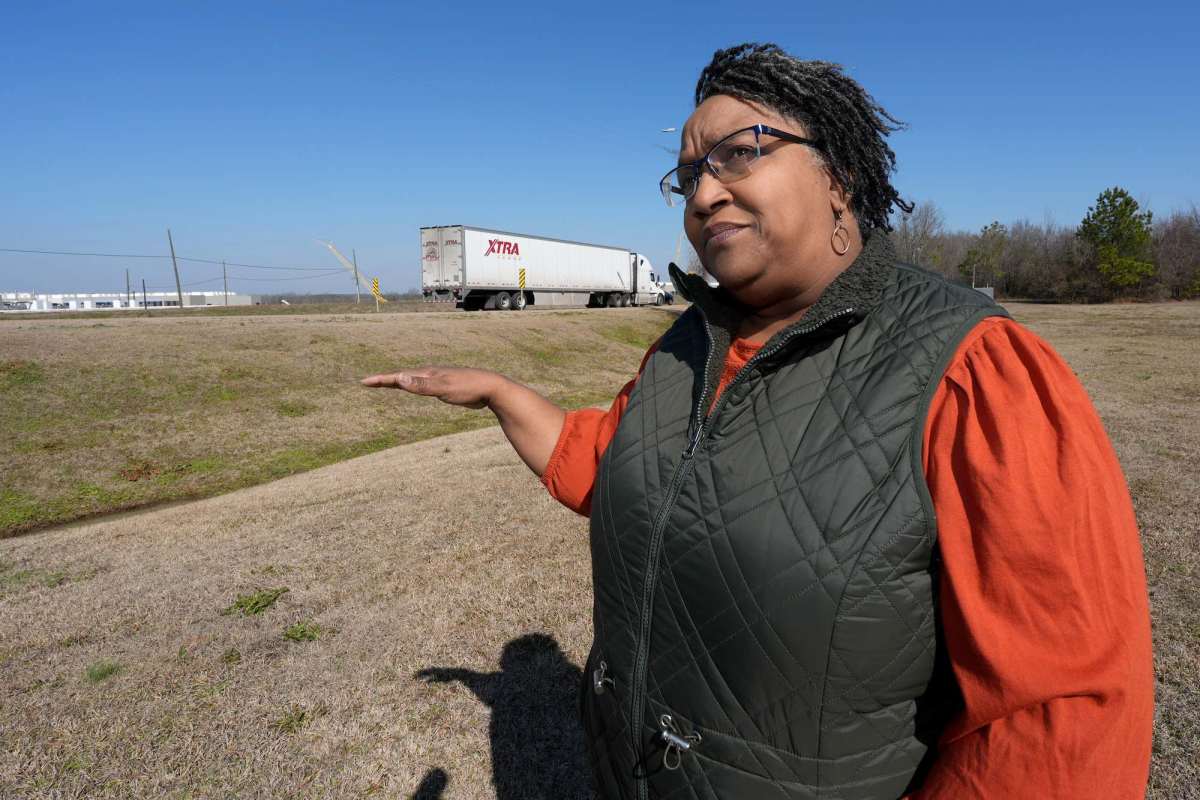
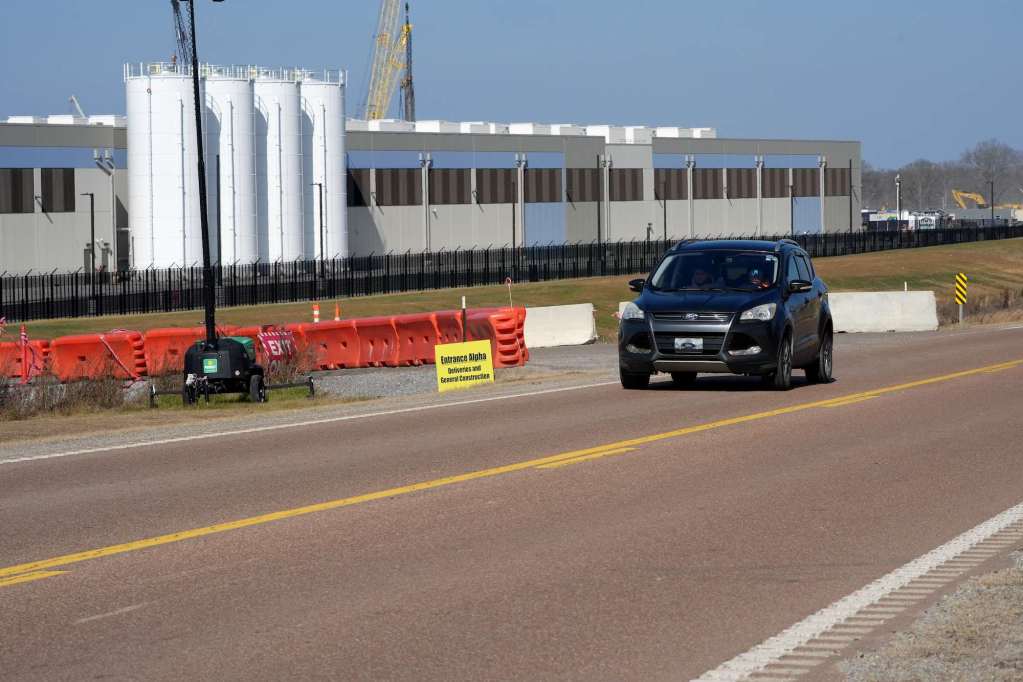
CANTON, Miss.—Johnny Sims has spent the past two years living next to a neighbor unlike any other. Less than 200 yards from his home on the outskirts of Canton, Mississippi, is a sprawling industrial park with a partially completed data center campus—one of two Madison County locations selected by Amazon to store, process and distribute massive amounts of digital data.
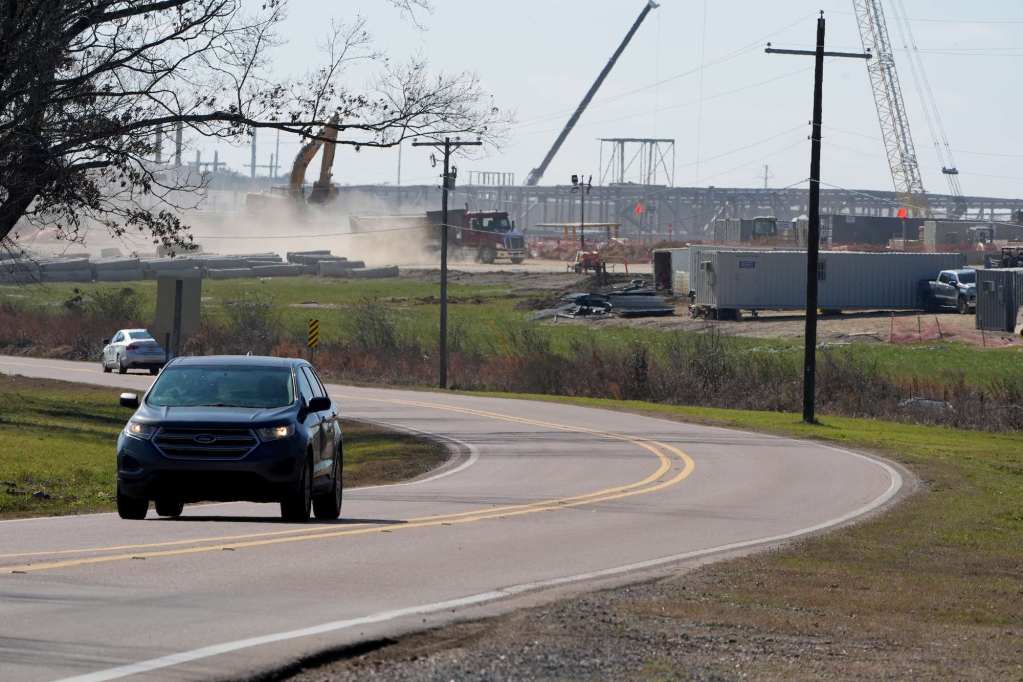
The arrival of the data center and adjacent development has transformed conditions in Idlebriar, the serene, tree-filled subdivision that Sims and his wife settled in three decades ago. An influx of traffic around the site has created bottlenecks in the neighborhood and lengthened residents’ commute times, and the sounds of vehicles and heavy machinery have kept Sims’ family up at night.
Ongoing construction has also caused dust to accumulate in the subdivision, covering houses, cars and vegetation and raising alarm bells about degraded air quality. The dust has proven especially damaging for Sims’ teenage daughter, who suffers from asthma and has had to wear a face covering outdoors to keep her symptoms from worsening.

She still wound up in the emergency room multiple times last year due to severe asthma flare-ups, her father told the Mississippi Free Press.
“Amazon brought a lot of baggage with them,” said Sims, who has been a Madison County constable for almost 30 years and previously served as Canton’s fire chief. “When I moved out here, it was a peaceful, quiet neighborhood. But once all that (development) came, everything went to mess.”
Amazon’s Madison County complexes are part of a boom in IT infrastructure development around Mississippi, fueled by the escalating power demands of artificial intelligence and large language models like ChatGPT. Last year, the state announced additional data center projects in Lauderdale and Rankin counties, as well as a third Amazon facility in Vicksburg, Mississippi. Local officials also confirmed in January that billionaire Elon Musk’s company xAI is building a mammoth data center in DeSoto County.
These projects promise to inject tens of billions of dollars into Mississippi and revitalize local economies, creating high-paying jobs in places like the Delta and generating millions in local tax revenue. In Amazon’s case, the tech giant is also investing in STEM education and workforce development programs around its campuses in Canton, Ridgeland and Vicksburg.
But the new data centers have also raised environmental concerns, from their massive energy and water consumption to their emission of greenhouse gases and other hazardous pollutants.
Those fears are heightened for communities closest to the data centers, which typically bear the brunt of air and noise pollution from the facilities while having little control over where they’re located.
In Canton’s Idlebriar neighborhood, many residents expressed surprise and dismay at the data center’s construction, noting that they were not prepared for the scale of the nearby development nor how it would affect their daily lives.
“We had no idea all of this was coming,” said René Johnson, a retired schoolteacher who lives across from the industrial park along Highway 22. “They didn’t tell us anything, even when it was in the making.”

In a statement to the Mississippi Free Press, Amazon emphasized its commitment to listening to residents around its facilities and proactively addressing their concerns.
“Amazon prioritizes being a responsible community partner, and that includes throughout the construction process,” the company wrote in a Jan. 30 email. “We aim to minimize disruption while still being able to deliver meaningful benefits, including new construction and long-term technology jobs, opportunities for local contractors and small businesses, and sustainable tax revenue that supports schools, public safety, and community services.”
Air Pollution Worries
Data centers’ power needs are vast—outpacing some cities in total electricity consumption and requiring huge amounts of grid energy to keep their servers running 24 hours a day.
This round-the-clock reliability is essential for the facilities, since any unplanned outages or downtime could impact critical services and have consequences for customers in an array of sectors.
To prevent even the smallest disruptions in server operations, most modern data centers have one or more sources of backup power on site, often in the form of massive generators powered by diesel fuel.
The Mississippi data centers under construction are no exception.
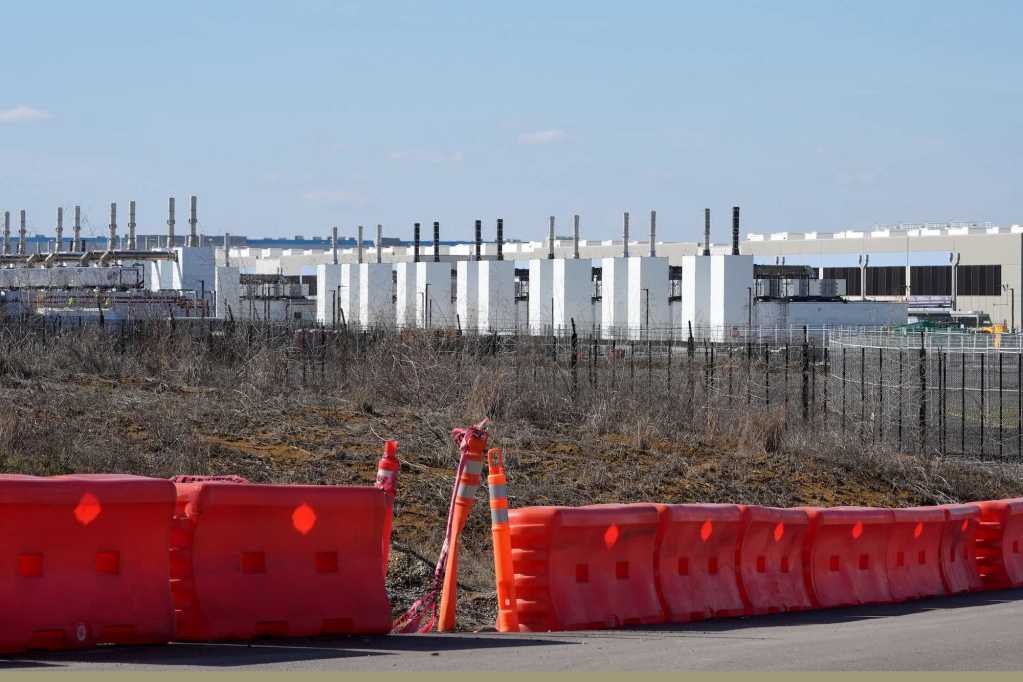
Permits issued by the Mississippi Department of Environmental Quality show that Amazon’s two Madison County campuses will house more than 700 diesel generators, over 300 of which will be located in Canton. At their maximum combined output, these machines will be capable of producing close to 2,000 megawatts of electricity—enough to temporarily power about half a million homes, according to some estimates.
“Seven hundred (generators) together is huge,” said Patrick Anderson, a senior attorney at the Southern Environmental Law Center specializing in the Clean Air Act. “We’ve been monitoring the whole data center surge … and we’ve seen a handful that are bigger, (but) not that are bigger than the combined (number).”
Amazon has asked MDEQ to approve more than 100 additional generators across its two sites, bringing the total number of diesel engines at its facilities to over 800, according to permit modification applications reviewed by the Mississippi Free Press. A separate permit application submitted to MDEQ shows that Compass Datacenters—the data center operator in Lauderdale County—intends to install 328 backup diesel generators with a power capacity just below that of the Amazon engines.
When they’re switched on, diesel generators are a major source of noise and air pollution, releasing heat-trapping gases like nitrogen oxides that contribute to climate change and smog. They also emit toxic pollutants linked to a range of chronic illnesses, from nitrogen oxides and particulate matter to cancer-causing chemicals like benzene.
“Exposure to diesel exhaust can lead to serious health conditions like asthma and respiratory illnesses and can worsen existing heart and lung disease,” the Environmental Protection Agency states on its website. The agency adds that scaling back “greenhouse gas emissions from diesel engines … can help address climate change.”
Given the risks to public health and the environment, the Clean Air Act heavily restricts the use of diesel generators and requires them to include specific technologies to curb their emissions. But the law provides exemptions for generators designated as backup power sources, which are only expected to run for limited periods and are therefore subject to less stringent pollution controls.

Under the permits issued by MDEQ, Amazon can operate its backup generators in Madison County for up to 100 hours a year for maintenance checks and readiness testing. Fifty of those hours may be spent on services unrelated to maintenance, like supplementing grid energy from the data centers’ main power provider, Entergy, explained Jaricus Whitlock, MDEQ’s air division chief.
Despite these hourly limits, Amazon’s permit applications estimate that nitrogen oxide emissions at its Canton data center could exceed 240 tons per year—roughly nine times higher than annual NOx emissions at Canton’s Nissan manufacturing plant and more than double the amount released by Entergy’s power station in neighboring Hinds County, according to the latest National Emissions Inventory data issued by the EPA. Total carbon monoxide emissions at the Canton site, meanwhile, could surpass 140 tons per year.
There are no restrictions on the use of backup generators in emergency situations. The EPA defines emergencies as sudden and unexpected events like grid failures, blackouts or natural disasters.
“In essence, it boils down to the curtailment of your primary, reliable power source,” Whitlock told the Mississippi Free Press in a December 2025 interview. If a “facility has a curtailment, which basically means an unplanned, unprompted cut of power from (their) provider, that would constitute an emergency.”
While Whitlock stressed that data centers are still subject to federal air quality laws during emergencies, other experts warned that allowing so many diesel engines at the facilities could open the door to emissions exceedances.
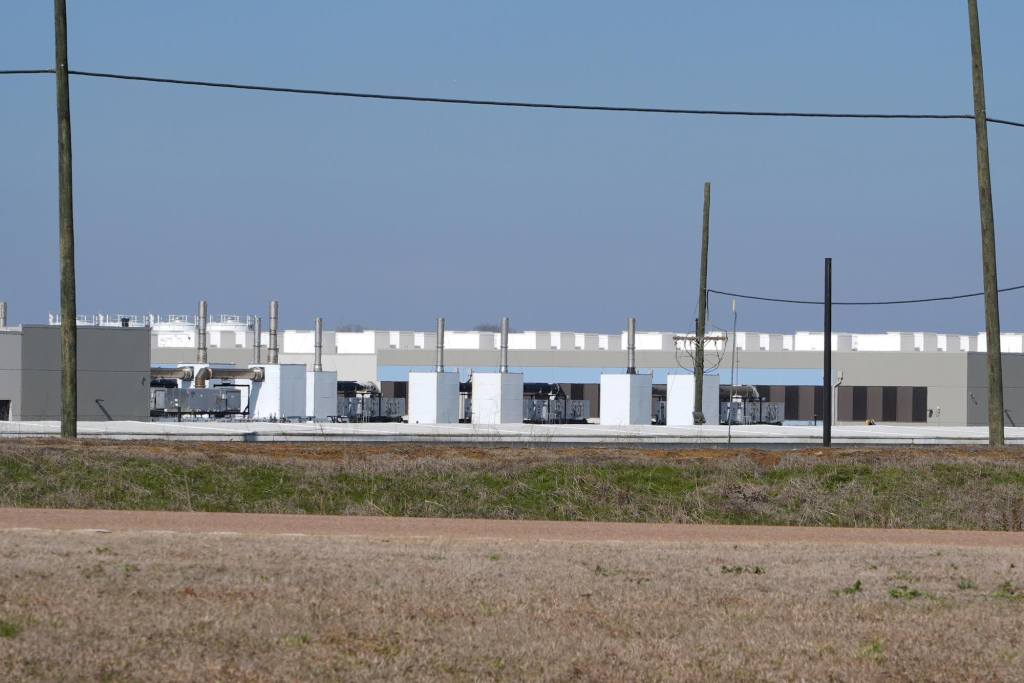
Even if the generators don’t run beyond their permitted time limits, combined emissions during emergencies or test periods could still pose a public health hazard, Patrick Anderson with the Southern Environmental Law Center told the Mississippi Free Press.
“If you turn on that many diesel generators at the same time, and you run them for (a) couple of hours or even less … you’re going to have violations of ambient air quality standards,” Anderson said. He added that pollution risks will be greatest during summer, when air quality is already at its worst.
Data center companies operating in Mississippi have been cited for air quality violations in other states. Last year, a Compass Datacenters facility in Leesburg, Virginia, paid a nearly $68,000 fine after exceeding emissions limits for multiple pollutants, according to EPA compliance data. The facility currently faces a high-priority violation that remains unresolved.
These types of violations could grow more common as data center proliferation puts more strain on U.S. electrical grids, leading operators to ramp up their diesel generator use, explained Chris Miller, president of the Virginia-based Piedmont Environmental Council.
Miller believes that by registering hundreds of diesel engines as backup power sources, data centers are exploiting a federal exemption originally intended for health care facilities and other critical infrastructure.
“No one who wrote that exception under the Clean Air Act assumed this scenario,” Miller said, noting that Virginia is now home to over 9,000 diesel generators classified as emergency power sources. “They’re taking a loophole that was designed for hospitals and they’re driving a literal Mack Truck through it.”
Feeling Trapped
Cynthia Allen doesn’t want to wait to find out if Amazon’s diesel generators will affect air quality in her community.
When she first learned that the tech giant would be moving into the property across from her neighborhood, the Idlebriar resident told the Madison County Economic Development Authority—the organization selling the land to Amazon—that she was interested in a buyout.

Years later, Allen says she and some of her neighbors are still waiting on an offer for their properties.
“I was never contacted by MCEDA,” said Allen, who purchased her house in 2018 and serves as alderwoman for Canton’s fourth ward. “Now, we’re in a position where we may not be able to even sell our homes, because nobody’s going to want to come to a house in the middle of a construction site.”
Like her neighbors, Johnny Sims and René Johnson, Allen says her quality of life has suffered since Amazon set up shop in the industrial park. She wakes up some mornings coughing and wheezing from a buildup of dust in her home, she told the Mississippi Free Press, and the traffic and noise around the construction site have disturbed the quiet scenery that drew her to the area in the first place.
Allen also highlighted the secrecy around the data center in development, claiming she and her neighbors were kept in the dark about the nature of the facility long after a decision had been made.
“When we really figured out what was going on, it was already too late,” Allen explained, noting that the project was simply presented to her community as an economic driver and job creator. “MCEDA is very, very crafty at selling the narrative that this is going to be big business, and for someone, it is. But for the people who … live in the community and chose the area specifically for the quiet and for their health, it’s really not good.”
MCEDA Executive Director Joey Deeson told the Mississippi Free Press that a non-disclosure agreement with Amazon kept him from sharing certain details about the data center during the development process. He added that since construction began at the industrial park, MCEDA has taken steps to reduce adverse effects on nearby homeowners, like hiring a company to pick up trash around the site and distributing air purifiers to households experiencing dust.
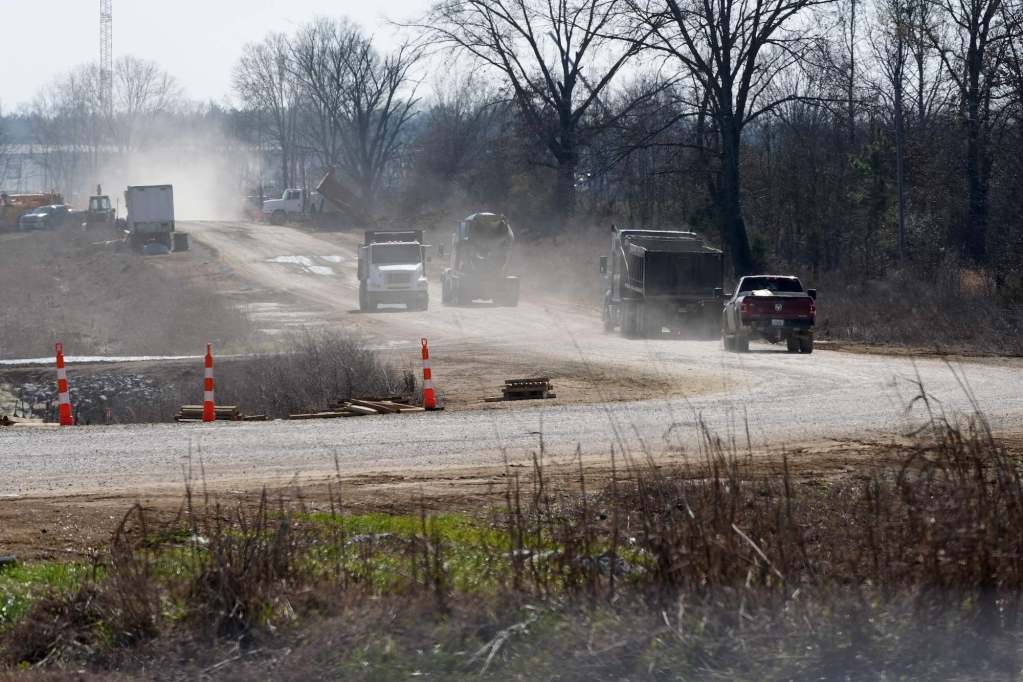
For its part, Amazon has presented Idlebriar residents with free fiber internet and car washes and gifted tablets to children in the subdivision, Deeson said.
“We’ve been very cognizant of the fact that there’s a lot of activity out there,” Deeson said in a Jan. 27 interview. “We will continue to work with the homeowners … to try to assist them in any shape, form or fashion.”
Deeson emphasized that as a public entity, MCEDA lacks the funds to acquire individual properties in the Idlebriar community—let alone orchestrate a buyout of the entire subdivision. He stressed that complaints about noise and worsening air quality in the area will largely resolve themselves once the data center is completed.
“All of this is temporary,” he said, noting that much of the traffic and dust around Idlebriar will subside as development activity moves away from the subdivision. “Construction is going to come to an end, especially the construction that occurs right in front of that little neighborhood.”

Even if Amazon finishes building its data centers in 2027, as some news outlets have reported, Allen worries about what living next to the Canton site could mean for her long-term health. She also fears her proximity to the campus could inflate her utility bills and drive down her property value, making it harder to get a fair price for her home.
Without the prospect of a buyout, Allen and other Idlebriar residents feel stuck.
“They’re just kind of putting us in an Alamo,” she said. “There’s nowhere to go.”