

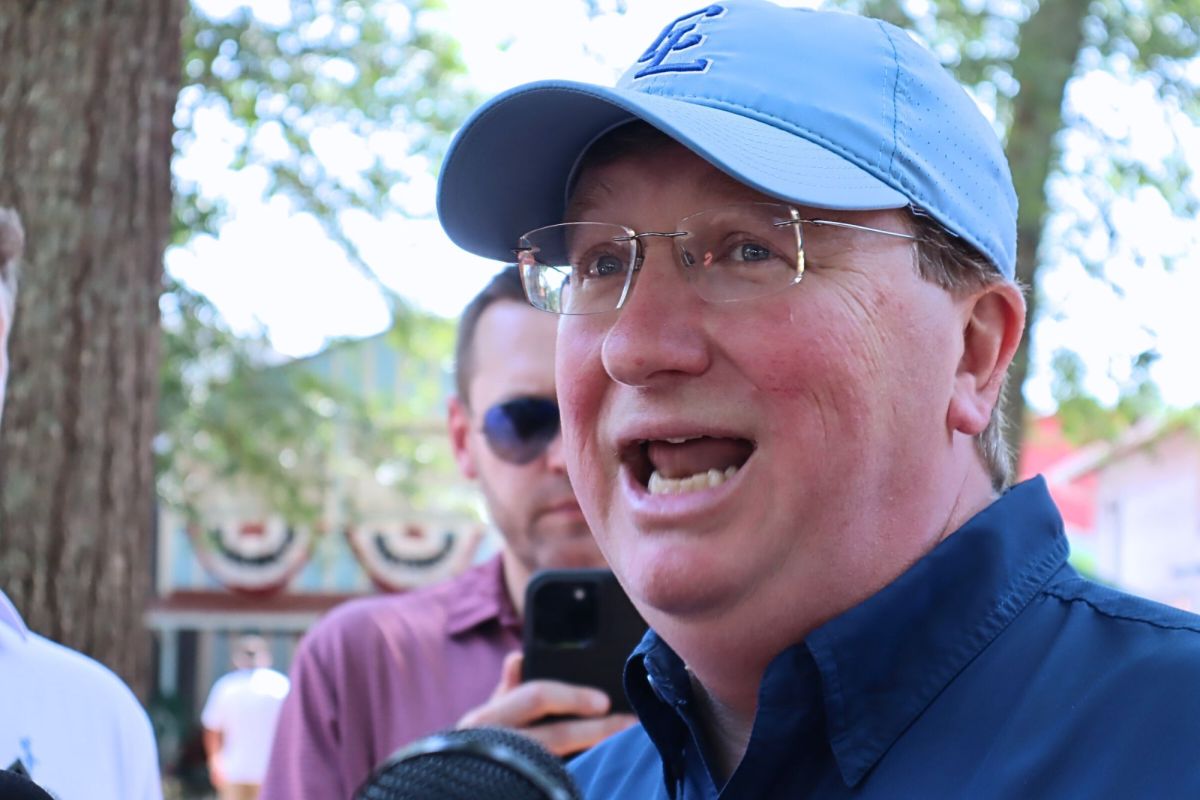
NESHOBA COUNTY, Miss.—Gov. Tate Reeves wants the Mississippi Legislature to consider consolidating 20 to 50 of the 138 school districts in the state. The leader of the Mississippi House Education Committee also says he wants to look at consolidating districts.
When he first revealed the proposal during a speech at the Neshoba County Fair on July 31, the governor said that consolidating smaller districts would increase money going into the classroom and decrease administrative costs—though some experts say that’s far from certain.
During the eight years that he served as lieutenant governor from 2011 to 2019, Reeves said the State eliminated 14 school districts, taking the count from 152 to 138 districts. But no school districts in any of Mississippi’s 82 counties have consolidated since he became governor. He expressed disapproval that the Legislature had not voted to close any additional school districts since he left the lieutenant governor’s office in 2020 and handed the reins to current Lt. Gov. Delbert Hosemann.
“I’m personally not married to a number. I’m not married to 82 (school districts) because the reality is that Issaquena County and Rankin County are both very different in their size and scope,” he told reporters on July 31.
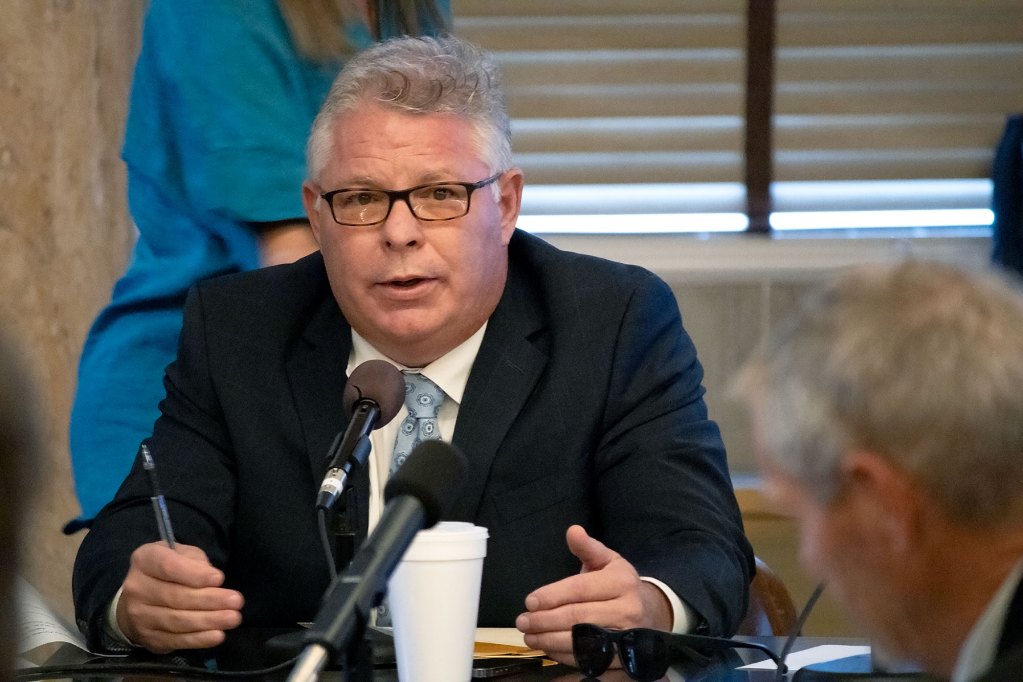
Mississippi House Education Committee Chairman Rep. Rob Roberson, R-Starkville, wanted a 15-person task force to study school district consolidation between the 2025 and 2026 legislative sessions. He introduced the idea in House Bill 1431 during this year’s legislative session, but it died in the Senate Education Committee.
The chairman told the Mississippi Free Press that Mississippi has more “administrative levels of government” in school districts than he believes is necessary. He said that if the House did decide to work on school-district consolidation, he wanted to ensure the additional money would go to the classroom.
“When you talk about consolidation, everybody gets worried that their school is going to get closed. Well, it may mean that their administration is going to combine, not necessarily the school,” Roberson told the Mississippi Free Press on Aug. 25. “Now, that doesn’t mean there doesn’t need to be consolidation of actual schools.”
Steven Barnett, a professor of education in economics and policy at Rutgers University, said that consolidating school districts often does not bring any extra cash to combined districts. While consolidating districts may work in some parts of the state, he said, sharing resources and services across school districts would be more beneficial.
“The trick is to figure out how to consolidate districts and actually save money,” Barnett told the Mississippi Free Press on Aug. 5. “Too often, we consolidate and there isn’t any savings. It really depends on, do you have school districts that are too small to have the scope that effectively supports the administration? And if those can be consolidated, yes, you can save money.”
‘Education Freedom’ Ranks High on Speaker’s Priorities
At the fair on the last day of July, Republican Mississippi House Speaker Jashon White said his top priority for the 2026 legislative session will be “education freedom.”
He said the Mississippi House will be evaluating educational opportunities for students who live in poverty, are in custody of the state, are children of military members or are children of first responders who live in failing and underperforming school districts.
“Our current system often falls short of delivering quality options for all students. Economically disadvantaged communities in Mississippi have been left with too few options for far too long,” the Republican representative from West, Mississippi, said at the Neshoba County Fair on July 31.
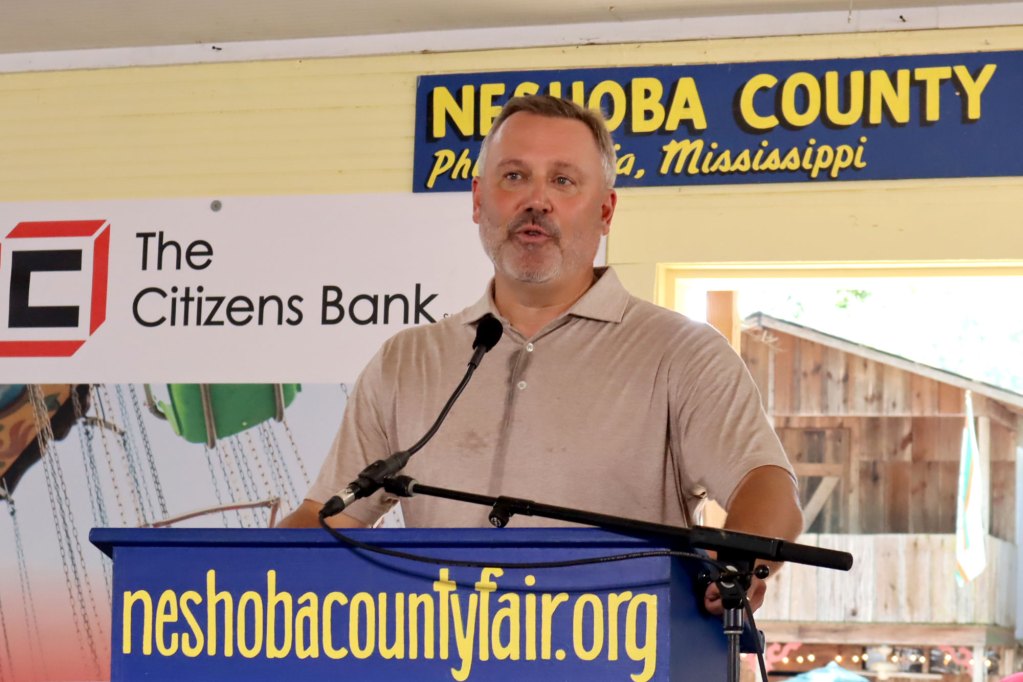
White’s central policy proposal for the 2026 session is to allow students to freely transfer from one school district to another so long as the transfer district accepts the student’s request.
The House speaker said President Donald Trump gave his approval of the idea when the president visited with Republican members of the Mississippi House and Senate at the White House this summer.
“And yes, the number one policy position of President Trump for our state is the passage of a robust school choice and education freedom package,” White said. “President Trump himself is promoting returning power over education to the states (and) to families instead of bureaucracies.”
Since taking office, Trump has repeatedly attempted to use federal mechanisms to force schools to comply with his policies and conform to his ideological views, including threatening federal funding for schools that use practices that promote diversity, equity and inclusion.
Gov. Tate Reeves told reporters after his Neshoba County Fair speech on July 31 that he supports White’s educational agenda for 2026.
White Questions Budget Surplus, Tax Rebate
Lt. Gov. Delbert Hosemann pledged to prioritize a state income tax rebate in the 2026 legislative session using funds from the $360 million surplus in Mississippi’s budget during his July 30 Neshoba County Fair speech. Speaker Jason White joked that he had no clue the state had surpluses until he heard the lieutenant governor’s speech.
“I’m glad to know we all of a sudden found a lot of surpluses that we will spend on different things, all that money that’s in the bank that just a few months ago we couldn’t find any money for cities and counties and universities. I don’t know what turned on the other end of the building, but I’m glad it turned up,” he said.

House Speaker Jason White claimed on July 31 that Hosemann copied Trump’s idea for a federal tax rebate. Hosemann said in his speech that he had watched Fox News the night before and saw Trump talking about a potential federal tax rebate.
Gov. Reeves said he heard the lieutenant governor’s proposal on July 30 but had not “seen the details.” He said he would like for the State to “expedite the tax cuts” outlined in House Bill 1, the new law that decreases the state income and grocery taxes while increasing the gas tax.
“It is a recognition that Mississippi continues to collect significantly more in revenue than we’re spending each year. Typical legislators’ solution to that is to spend more,” Reeves said. “I’m glad that the lieutenant governor highlighted the fact yesterday, and I think most of us agree that what we need to do in Mississippi is we need to spend less and let the taxpayers keep more of their money.”